
Oil is heading toward a sharp weekly decline, but the market is not exactly offering investors a clean bearish signal. Middle East supply concerns are helping establish a price floor even as fresh evidence of a supply glut—and demand destruction caused by high prices—pushes in the opposite direction.
That tug of war puts Canadian Natural Resources Limited, traded as $CNQ, in an awkward corner of the energy market. The company has the scale and resource base of a major Western Canadian producer, yet its outlook remains tied to a commodity market that is being pulled between geopolitical fear and weakening fundamentals.
The latest backdrop is a reminder that oil prices do not need a dramatic collapse to complicate the earnings story for producers. A sustained retreat, or even a market that remains volatile and directionless, could make revenue expectations and valuation judgments more difficult. For $CNQ, the question is not simply whether crude can find a floor. It is whether that floor is supported by durable demand—or by a temporary geopolitical premium.
A floor built on uncertainty
Middle East supply concerns are providing support to oil prices, effectively placing a floor beneath a market otherwise leaning lower. That support matters because disruptions or heightened tensions can quickly alter expectations for available supply. But a geopolitical price floor is an unstable foundation for an investment narrative: it can remain in place, weaken, or disappear as market perceptions change.
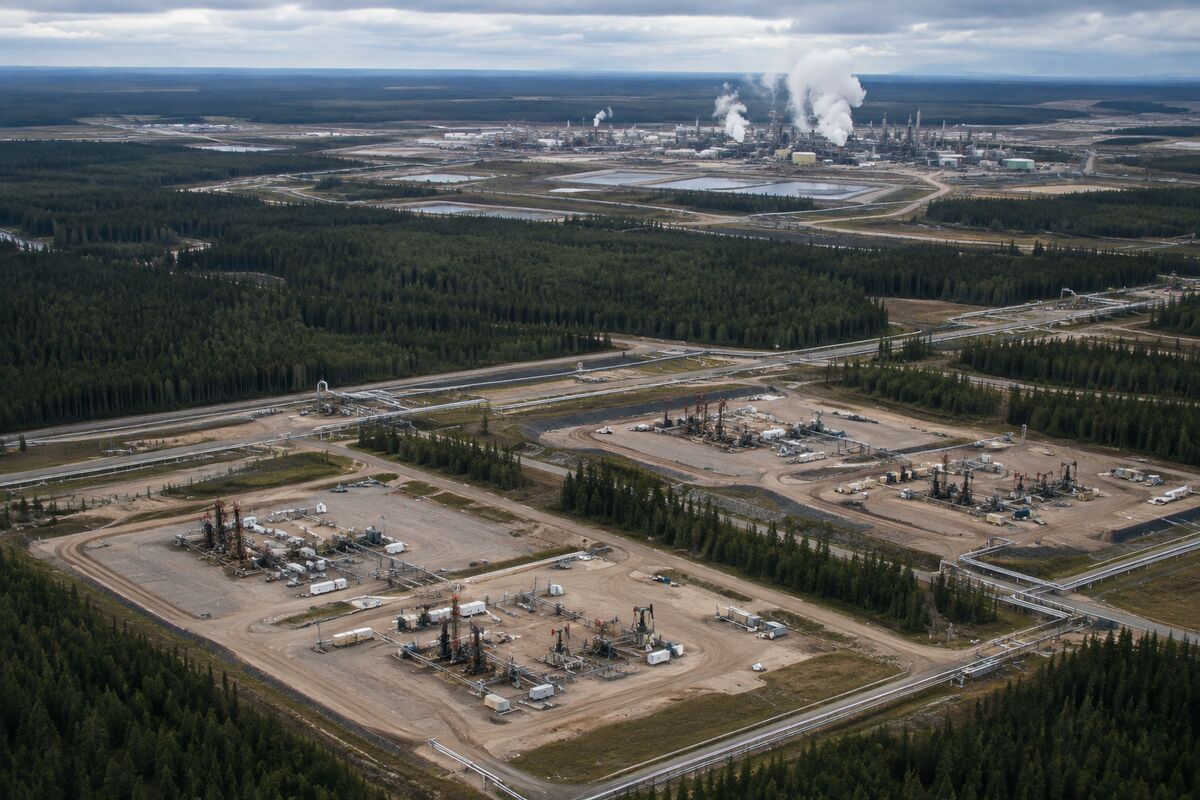
For Canadian Natural Resources, the implication is a more complicated planning environment. The company explores, develops and markets crude oil, natural gas and natural gas liquids in Western Canada. Its broad commodity exposure may offer some diversification within the energy complex, but crude remains central to how investors may assess the company’s operating outlook and valuation.
Supply is meeting resistance from demand
The more troubling signal for oil bulls is the emergence of a supply glut. High prices are curbing demand, according to the assignment’s market context, while additional supply is appearing. That combination can weigh on prices from both sides: producers are bringing barrels into a market where consumers are becoming more cautious.
This is where the current oil setup differs from a straightforward supply-shock story. Geopolitical risk may limit the downside, but it does not erase the possibility that demand is weakening beneath the surface. If the market begins to focus more heavily on excess supply and consumption restraint, earnings expectations for producers such as $CNQ could face pressure. Valuations may also become harder to defend if investors assign less confidence to future commodity prices.
The market’s crosscurrents are visible beyond crude. US natural gas prices were flat at $2.95 per million British thermal units amid broader energy-market volatility. That stability does not resolve the oil debate, but it reinforces the sense that energy markets are moving through a period of uneven signals rather than a single, coherent trend.
What the conflicting signals mean for $CNQ
Investors assessing $CNQ may be weighing two competing narratives. The first is a supply-risk narrative: Middle East concerns could continue to support crude and preserve a degree of pricing power. The second is a fundamentals narrative: high prices are curbing demand while signs of excess supply emerge, potentially dragging on the market even without a major geopolitical de-escalation.
That tension could influence both earnings expectations and valuation multiples. A stronger oil floor may support the revenue outlook, while a deeper or longer weekly decline could encourage more conservative assumptions. The company’s Western Canadian production profile makes the broader commodity cycle especially important to the market’s interpretation of its prospects.
The source material behind this market discussion is available through Yahoo Finance’s CNQ page, alongside the supplied market reports. The key takeaway is not that one force has decisively won. It is that investors are being asked to price a company against an oil market where geopolitical risk supports prices at the same time that demand and supply trends point lower.
That is a difficult backdrop for any energy equity. For $CNQ, the path forward may depend less on a single headline than on which signal persists: the geopolitical floor beneath crude, or the growing evidence that high prices are beginning to weaken the market itself.
Bull/Bear Verdict
Bull Case: Middle East supply concerns may continue to provide a floor for crude, potentially supporting earnings expectations for $CNQ despite broader energy-market volatility.
Bear Case: The expected sharp weekly oil decline, combined with high prices curbing demand and emerging supply-glut signals, could pressure $CNQ’s earnings outlook and valuation.