
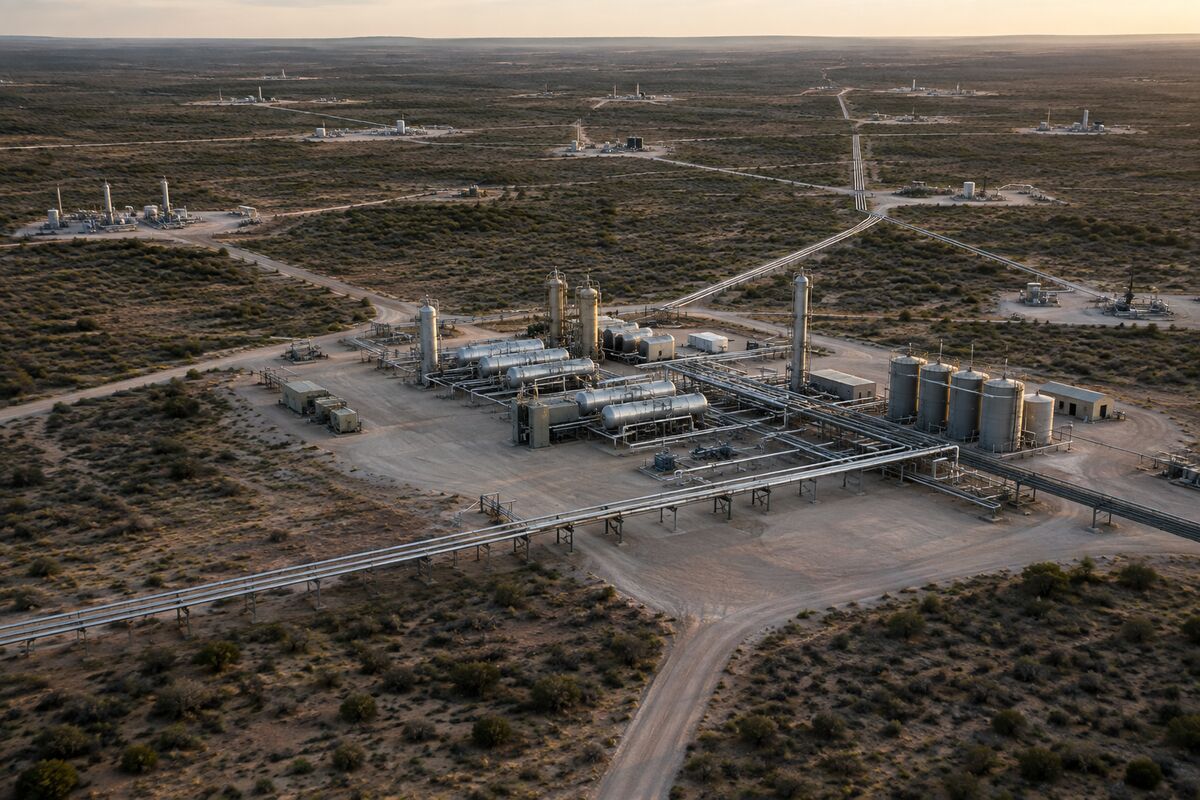
Permian consolidation is moving forward even as the oil market’s mood turns more defensive. Diamondback Energy has confirmed a $5 billion cash-and-stock transaction to acquire Permian Basin holdings from Double Eagle, putting capital behind the view that scale and acreage concentration still matter in US shale.
For holders and prospective traders of Diamondback’s $FANG, the deal is more than an asset purchase. It is a test of whether investors will support renewed shale mergers and acquisitions when oil prices face pressure from surplus concerns. The answer may depend less on the headline price than on what the transaction ultimately adds in production scale, acreage quality and operating leverage.
Diamondback confirmed the transaction on November 16, 2026. The structure combines cash and stock, while the total stated consideration is $5 billion. The company is acquiring the Permian holdings from Double Eagle, further consolidating acreage under one of the basin’s largest pure-play producers.
That consolidation is the central strategic point. The Permian remains a critical US shale basin, and ownership concentration can give a major operator more control over contiguous development opportunities. A larger position may also support greater production scale, although the transaction’s eventual effect on output will need to be assessed rather than assumed. Investors will want clarity on how the acquired holdings fit with Diamondback’s existing operating footprint.
Why the deal matters for $FANG
For Diamondback shareholders, the cash-and-stock structure creates two immediate questions. First, can the acquired holdings strengthen the company’s production platform and acreage inventory? Second, does the transaction establish a precedent for the premium that buyers may need to pay for attractive Permian assets?
The $5 billion headline provides a clear reference point for the market, but it does not answer those questions by itself. Without additional valuation multiples, share-price data or deal terms beyond the confirmed cash-and-stock consideration, investors should focus on the assets being acquired and the strategic fit. Acreage quality will be particularly important. Not all Permian holdings carry the same development potential, and the market may distinguish between scale that improves future flexibility and scale that simply expands the footprint.
A read-through for shale M&A
The transaction also offers a broader signal for US energy equities. Renewed Permian M&A appetite, despite oil-market pressure linked to surplus fears, suggests that strategic buyers may still see value in consolidating high-quality shale positions. That does not mean every deal will receive the same reception. A softer oil backdrop can make investors more sensitive to acquisition pricing, financing, dilution and the timing of expected production benefits.
In that environment, the market may judge Diamondback on execution. Investors could monitor whether the acquisition increases production scale without weakening the company’s financial flexibility, whether the acreage improves the quality of its inventory and whether the cash-and-stock mix changes the market’s assessment of the transaction.
The deal may also influence expectations across the Permian. If investors accept the acquisition as strategically sound, it could reinforce the case for further consolidation among major operators and asset holders. If the market views the $5 billion price as demanding amid softer oil conditions, it could instead raise the bar for future transactions and intensify scrutiny of M&A premiums.
That is the contrarian tension. Shale consolidation can create strategic advantages, but scale is not automatically value creation. Diamondback’s deal puts the burden on management to demonstrate that the acquired Permian holdings improve the company’s production platform and acreage position in a market that is already questioning how much expansion oil prices can support.
The source announcement from Seeking Alpha confirms the essential facts: Diamondback is buying Double Eagle’s Permian holdings in a $5 billion cash-and-stock transaction. The next phase will be investor analysis of asset quality, production scale and the premium implied by the deal.
Bull/Bear Verdict
Bull Case: The $5 billion cash-and-stock acquisition could strengthen $FANG’s production scale and acreage position while reinforcing Diamondback’s standing as one of the Permian’s largest pure-play producers.
Bear Case: Oil-market pressure from surplus concerns could make investors more sensitive to the transaction’s $5 billion price, the quality of the acquired acreage and any M&A premium implied by the deal.