
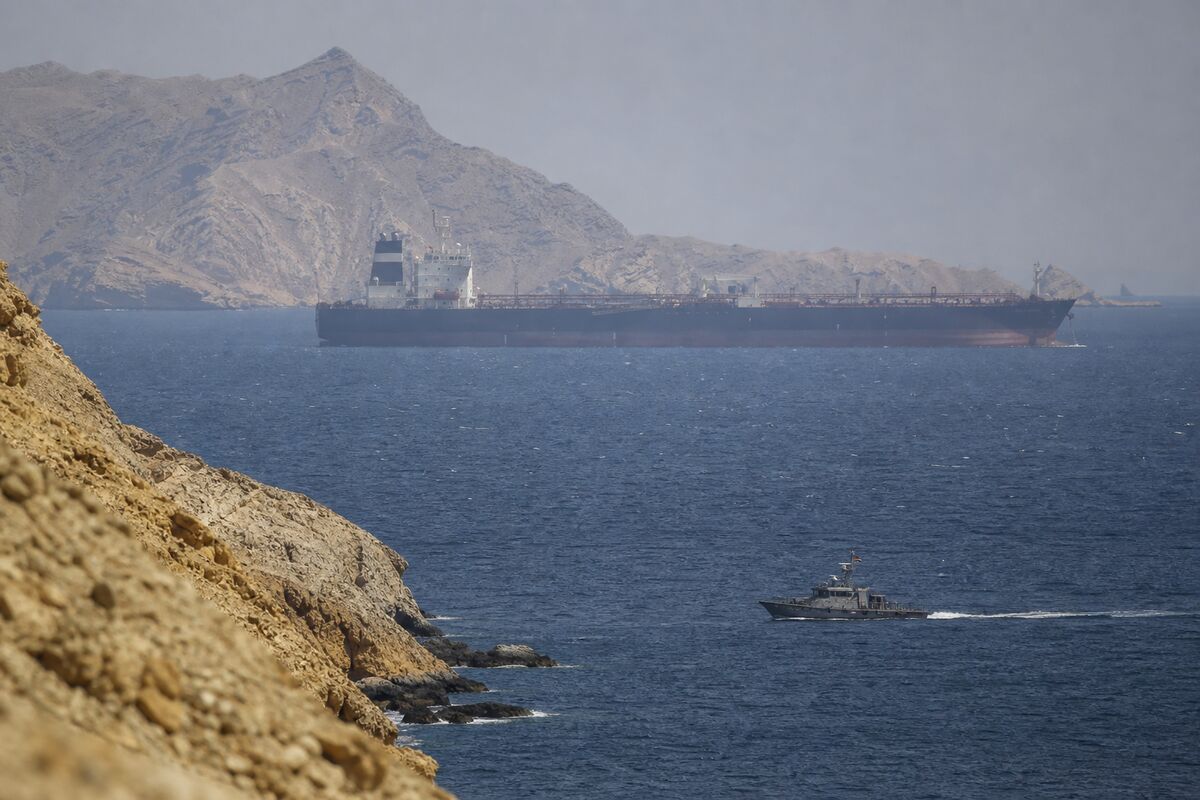
Oil markets are being pulled in two directions: US crude inventories delivered a bearish supply signal, while two tanker incidents near Oman introduced a fresh geopolitical fault line. For crude oil futures, the result is a contest between barrels already visible in storage and barrels whose movement may become more expensive or uncertain.
The incidents do not establish that physical supply has been disrupted. They do, however, put the Strait of Hormuz back at the center of the risk conversation, where a mine report, a projectile strike and the prospect of higher shipping costs could carry more weight than a single weekly inventory increase.
Two incidents, one strategically sensitive corridor
The UK maritime agency UKMTO identified two tanker incidents near Oman. Iran said a vessel struck a mine east of the Strait of Hormuz. Separately, UKMTO reported that another tanker caught fire after a projectile strike near the strait. The details matter because the market does not need a confirmed supply outage to begin reassessing the cost of moving crude through a vulnerable area.
A disruption around the strait could complicate shipping schedules. Even without a confirmed interruption, heightened insurance and freight costs could make each cargo more expensive to transport. That is the mechanism through which a geopolitical premium may enter crude oil futures: traders may price in the possibility that future supply arrives with greater logistical uncertainty and a higher cost attached.
UKMTO's reporting gives traders a concrete reason to monitor the security picture around Oman and Hormuz rather than treating the issue as a purely theoretical tail risk.
Inventories push the other way
The domestic data offer a markedly different message. US crude inventories rose by 3.38 million barrels to 417.8 million barrels in the week ended Nov. 13, according to EIA data. That increase suggests more crude was available in US storage during the reporting week, a development that may weigh on the immediate supply-demand narrative for futures.
In a quieter market, the inventory build might dominate the discussion. Rising stocks can indicate that available supply is outpacing near-term demand or that refiners and other buyers are absorbing less crude than expected. The data therefore create a bearish counterweight to the incident reports, without saying anything about the future path of crude prices.
Why the premium may outlast the headline
The tension is not simply between “more oil” and “less oil.” US inventories measure barrels held onshore in the United States. The tanker incidents speak to the cost and reliability of transporting energy through a strategically important maritime route. Those are different parts of the market, and they can send opposing signals at the same time.
For crude oil futures, the incidents could matter most if they lead to additional vessel precautions, higher insurance charges or more costly shipping. Those effects may raise the value traders place on immediate availability even while US storage is increasing. Conversely, if the incidents do not produce broader disruption, the inventory build may retain the upper hand in the near-term narrative.
That leaves the market with an uncomfortable balancing act. The 3.38-million-barrel increase is a measurable, domestic supply signal. The Hormuz reports are an unfolding security risk whose eventual market impact depends on whether shipping is disrupted or merely repriced. One is a number in a weekly release; the other is a question mark attached to the supply chain.
For now, that question mark is large enough to keep a geopolitical premium in the conversation—but not large enough, on the information available, to establish that crude supply has been interrupted.
Bull/Bear Verdict
Bull Case: The reported mine incident and projectile strike near the Strait of Hormuz could raise insurance and shipping costs, potentially adding a geopolitical premium to crude oil futures even as traders assess supply security.
Bear Case: US crude inventories rose by 3.38 million barrels to 417.8 million barrels for the week ended Nov. 13, suggesting a more comfortable domestic supply picture that could counterbalance the tanker-related risk.