
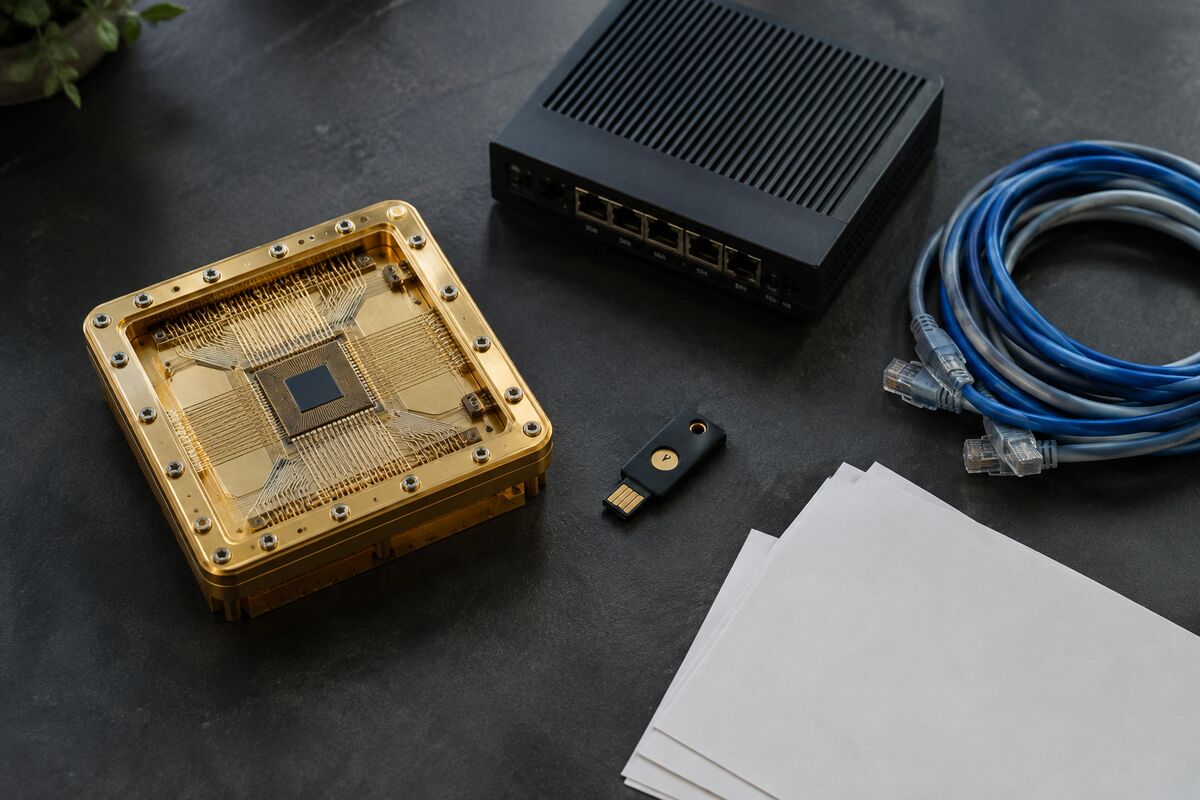
Quantum computing’s next competitive battleground may be security—not just speed. IonQ has completed its acquisition of Elisity, Inc. in an all-stock transaction, adding a Zero Trust security company to its portfolio as the quantum sector looks beyond hardware and into the systems that protect enterprise and government networks.
The deal gives IonQ a broader platform for pursuing quantum security opportunities. It also creates a sharper investor question: can a company known for quantum computing turn cybersecurity capabilities into a meaningful commercial extension without allowing integration complexity and stock-based consideration to overwhelm the strategic logic?
From quantum platform to security architecture
IonQ describes itself as the world’s leading full-stack quantum platform and foundry. That description matters because the company is positioning itself across more than a single layer of the quantum technology stack. The Elisity acquisition extends that positioning into Zero Trust security, an approach built around continuously controlling and verifying access rather than assuming that users, devices, or network locations are automatically trusted.
Elisity’s role is therefore relevant to IonQ’s broader quantum security strategy. Quantum computing is frequently discussed in terms of future computational capabilities, but the security implications are immediate: enterprises and government agencies must think about how sensitive systems, identities, devices, and data are protected as technology changes. A Zero Trust capability could give IonQ a more direct connection to those security priorities.
That does not mean the transaction instantly creates a new financial engine. It does mean IonQ now has an additional technology and customer pathway through which it may pursue security-related applications alongside its full-stack quantum platform and foundry business.
Why enterprise and government customers matter
The acquisition is explicitly framed around enterprise and government customers. Those markets are strategically important because cybersecurity requirements are often embedded in broader technology decisions. A customer evaluating quantum systems may also need to address access controls, network segmentation, identity management, and protection of sensitive infrastructure.
Elisity could help IonQ engage with those requirements from a wider starting point. The potential opportunity is not simply to sell quantum computing, but to participate in a more comprehensive security conversation. For enterprise and government buyers, that may make IonQ’s quantum security strategy more relevant to existing operational concerns.
For traders watching the quantum sector, the transaction also fits a broader industry pattern: quantum companies are pursuing cybersecurity-adjacent mergers and acquisitions as they seek commercial applications ahead of broad commercial quantum advantage. The strategic rationale is clear. Security can provide a nearer-term business discussion while quantum computing continues to develop.
The investor questions are straightforward—and unresolved
The first issue is integration. IonQ must combine Elisity’s Zero Trust technology, people, products, and customer relationships with its existing operations. The strategic fit may be attractive, but execution will determine whether the acquisition becomes a coherent platform or simply an expanded corporate story.
The second issue is the all-stock structure. Because the deal was completed using IonQ shares, investors may focus on potential dilution and whether the acquired capabilities ultimately justify issuing equity. The assignment provides no transaction valuation or share count, so the financial impact cannot be quantified here.
The third question is timing. IonQ may identify enterprise and government opportunities through Elisity, but the pace at which those opportunities translate into monetization remains uncertain. Investors will likely watch for evidence of customer adoption, product integration, and a clearer connection between Zero Trust security and IonQ’s broader quantum offering.
IonQ’s announcement of the completed Elisity acquisition makes the strategic direction plain: quantum computing is being connected to cybersecurity rather than treated as an isolated hardware story. That could broaden IonQ’s addressable customer base, but the market will still demand proof that the platform can be integrated and monetized.
Bull/Bear Verdict
Bull Case: The completed all-stock acquisition could broaden IonQ’s full-stack quantum platform and foundry strategy by adding Elisity’s Zero Trust capabilities, potentially strengthening access to enterprise and government customers.
Bear Case: The transaction may bring integration challenges, potential dilution from its all-stock structure, and uncertainty over when Elisity’s security capabilities could translate into monetization.