
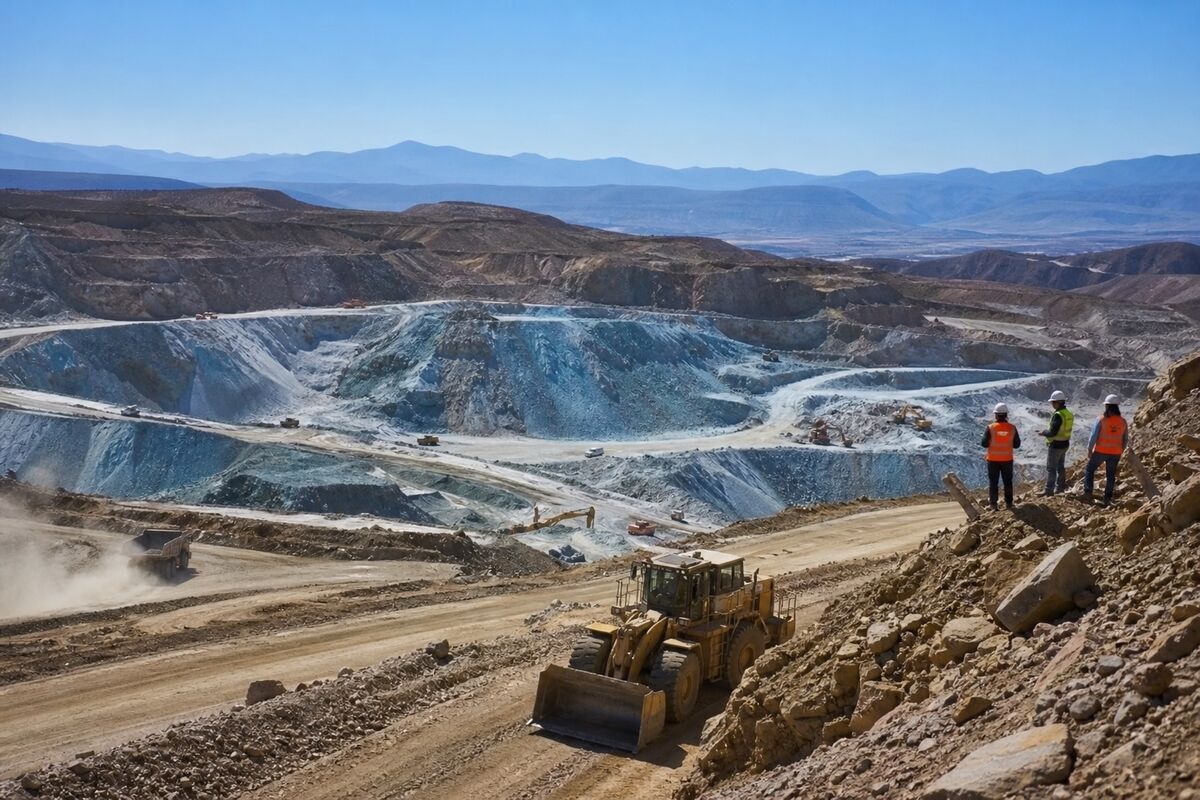
Lithium Americas Corp. is moving Thacker Pass toward a late-2027 Phase 1 completion, but the project’s price tag has reached $3.83 billion. That combination puts execution, capital intensity and timing at the center of the debate around $LAC.
The market backdrop is adding pressure. The $LIT fund fell 2.23% to $59.98 on Nov. 10 and sat just 0.3% above its 12-month low, leaving lithium equities exposed to a difficult sentiment cycle as Thacker Pass enters its most demanding spending period.
The latest estimate is not simply a construction headline. It is a test of how investors weigh a strategically important US battery-supply project against higher costs and a longer period of capital deployment. Lithium Americas expects peak spending in 2026, with investment continuing through 2027 and 2028 to support the multi-year mine buildout.
Capital intensity moves to the forefront
A $3.83 billion project estimate makes capital allocation a central trading variable for $LAC. The key issue is not only the total figure, but also the duration of spending. With peak expenditure expected in 2026 and additional investment continuing in 2027 and 2028, the project remains a prolonged execution story rather than a near-term completion event.
That timeline creates several points for the market to monitor:
- Cost control: The higher estimate raises the importance of managing construction spending as the buildout advances.
- Schedule delivery: Late 2027 is the company’s target for Phase 1 completion, making timing an important measure of execution.
- Capital duration: Spending is expected to remain elevated beyond the 2026 peak, extending the period in which investors may focus on funding requirements and project progress.
The available information does not establish a specific financing outcome. It also does not provide a specific production forecast. Those gaps matter: investors can assess the announced cost and schedule, but should not treat them as evidence of a defined future output level or capital structure.
Why Thacker Pass matters to the US
Thacker Pass matters because it is tied to US domestic battery-supply ambitions. A large-scale domestic lithium project could carry strategic importance for efforts to build supply chains inside the United States, particularly as battery materials remain a focus for industrial policy and energy security.
Strategic relevance, however, does not eliminate construction risk. The project still has to move from spending through execution and toward the targeted late-2027 Phase 1 completion. The $3.83 billion estimate makes every schedule milestone more consequential, especially while lithium-market sentiment remains weak.
For traders, the contrast is sharp: Thacker Pass represents a US supply-chain objective, while $LIT’s Nov. 10 performance reflects a market that is still under pressure. The fund’s 2.23% decline to $59.98 and position just 0.3% above its 12-month low suggest that sector sentiment is offering little cushion for project-cost disappointment.
Sentiment may amplify execution headlines
In a stronger lithium tape, investors might place greater emphasis on long-term strategic value. Near a 12-month low, however, the market may react more aggressively to evidence of cost inflation, schedule changes or extended spending. That does not determine the project’s eventual outcome, but it does raise the sensitivity of $LAC to each new construction update.
The company’s target remains late 2027 for Phase 1 completion, with spending expected to peak in 2026 and continue through 2028. As the reported project update indicates, the investment case is therefore tied to execution over multiple years, not to a single near-term catalyst.
The cleanest framework is to separate what is known from what remains unresolved. Known: Lithium Americas has raised the Thacker Pass estimate to $3.83 billion, targets late 2027 for Phase 1, and expects spending to remain active across 2026, 2027 and 2028. Unresolved: the eventual production profile, financing outcome and how the lithium market will look when the project reaches completion.
That mix leaves $LAC as a high-visibility critical-minerals name with substantial strategic importance but meaningful execution exposure. Until the market sees further evidence on cost control and schedule delivery, the weak $LIT backdrop may continue to shape sentiment as much as the project’s US supply-chain role.
Bull/Bear Verdict
Bull Case: Thacker Pass could strengthen US domestic battery-supply ambitions if Lithium Americas meets its late-2027 Phase 1 target while managing the $3.83 billion cost estimate and spending expected through 2028.
Bear Case: The $3.83 billion estimate, peak spending in 2026 and continued investment through 2028 could heighten execution pressure, especially with $LIT down 2.23% to $59.98 and only 0.3% above its 12-month low.