
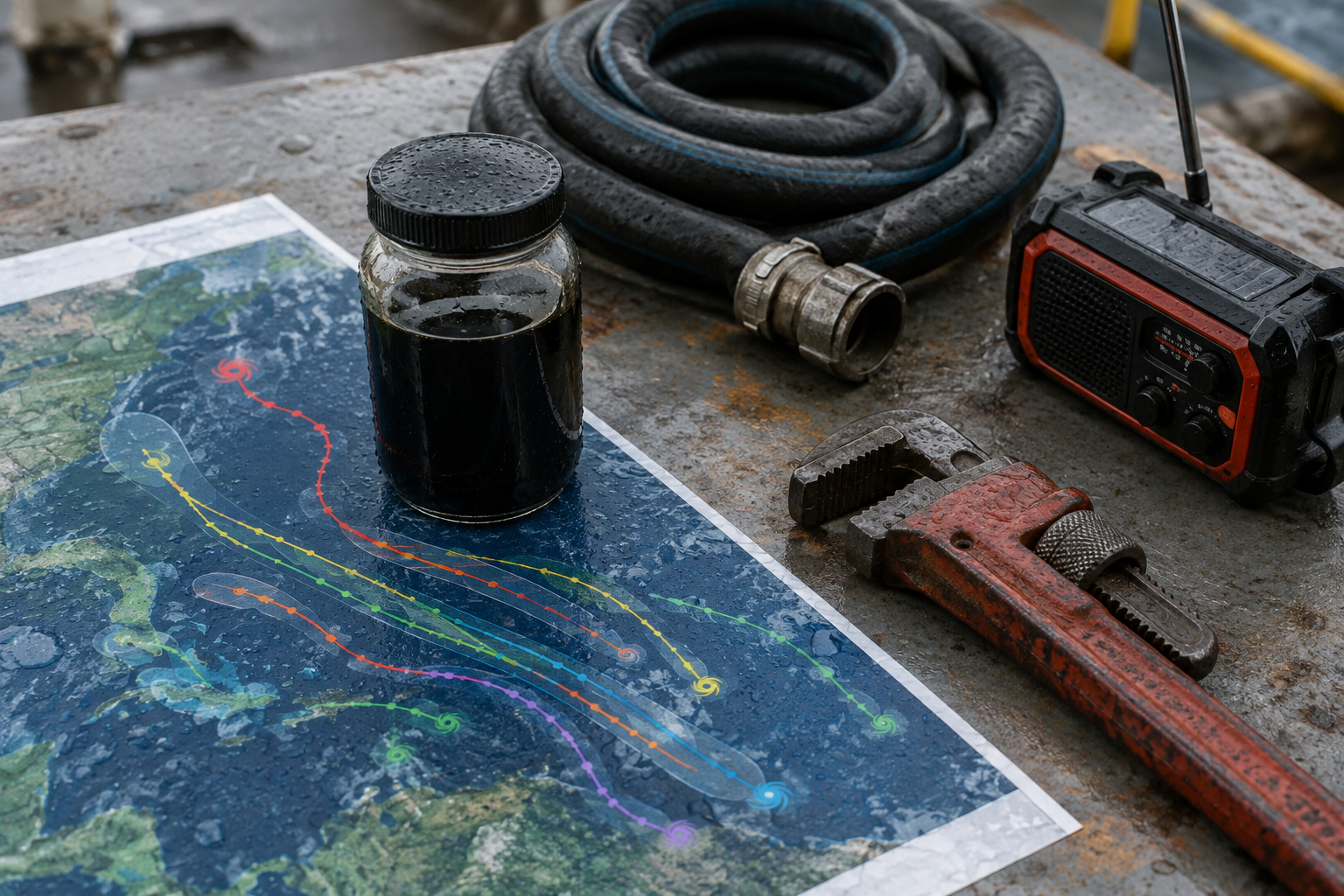
Oil markets are entering the fourth quarter with less room for error. WTI crude settled around $91.85 a barrel on Oct. 9, up $0.36 on the day, as additional US production was shut ahead of an approaching hurricane.
That move came alongside a 3.2 million-barrel decline in US commercial crude inventories, while Brent crude traded near $104.72. The result is a market where weather disruption is colliding with thinner safety cushions—and where a modest outage could carry a larger price signal than it might in a better-supplied environment.
The latest rally was not simply a weather story. It was a reminder that physical oil markets are being asked to absorb several competing demands at once. Emergency reserve releases and new Asian buyers are competing for limited barrels, according to the market backdrop described in the reported energy-market analysis. When inventories are declining and spare supply feels less abundant, every interruption can add another layer to the market’s risk premium.
Hurricanes turn logistics into a price variable
Hurricane-related production outages matter because they can affect both the flow of crude and the timing of deliveries. The shutdowns ahead of the approaching storm have tightened the near-term US supply outlook, even if the physical impact ultimately proves temporary.
For traders, that distinction is central. A temporary outage can still create immediate volatility if refiners, exporters and other buyers move quickly to secure replacement barrels. The 3.2 million-barrel weekly inventory decline adds weight to that concern, suggesting that the cushion available to absorb another disruption is not as generous as it was previously.
WTI at $91.85 and Brent near $104.72 also show how the market is pricing different benchmarks within a broader supply narrative. The numbers do not establish a forecast, but they do illustrate that crude is already trading at elevated levels while weather risk remains in view.
What it could mean for energy stocks
Higher crude prices may improve the revenue backdrop for producers, but the effect on individual companies depends on far more than the benchmark quote. ConocoPhillips, or $COP, has exposure to crude prices through its production business. A sustained rise in oil may therefore matter to its earnings outlook, while a short-lived hurricane spike could have a different significance than a lasting change in global supply.
Ranger Energy Services, or $RNGR, represents a different kind of exposure. As an oilfield-services company, its fortunes are linked more directly to drilling and well-servicing activity, customer budgets and the broader health of US energy operations than to any single day’s move in WTI. A crude-price increase may support industry activity over time, but it does not automatically translate into an identical move for a services stock.
The same principle applies across US and Canadian energy names: company exposure can vary by production mix, geography, contracts, operating costs and balance-sheet structure. Broad crude strength is a market input, not a company-specific result.
A supply-risk premium for earnings season
Heading into fourth-quarter earnings season, the supply-risk premium may become a central market theme. Producers could face questions about realized pricing and operational continuity, while services companies may draw attention to whether customers are maintaining activity amid changing commodity conditions.
The bullish interpretation is straightforward: declining US inventories, hurricane-related outages and competition from emergency reserve releases and new Asian buyers could keep limited barrels in high demand. The bearish interpretation is less dramatic but just as important: if disruptions prove temporary, the weather premium could fade, leaving companies to trade more on their individual operating results than on the headline crude price.
For now, the market’s message is one of sensitivity. With WTI near $92 and Brent above $104, a thinner cushion means volatility may arrive through the supply chain before it appears in an earnings release.
Bull/Bear Verdict
Bull Case: WTI at $91.85, Brent near $104.72 and a 3.2 million-barrel US inventory decline suggest that hurricane outages and thinner supply cushions could keep the crude-market risk premium elevated.
Bear Case: If the hurricane-related production shutdowns prove temporary, the current premium could fade, leaving $COP and $RNGR more exposed to their distinct company and industry fundamentals than to the latest crude-price move.