
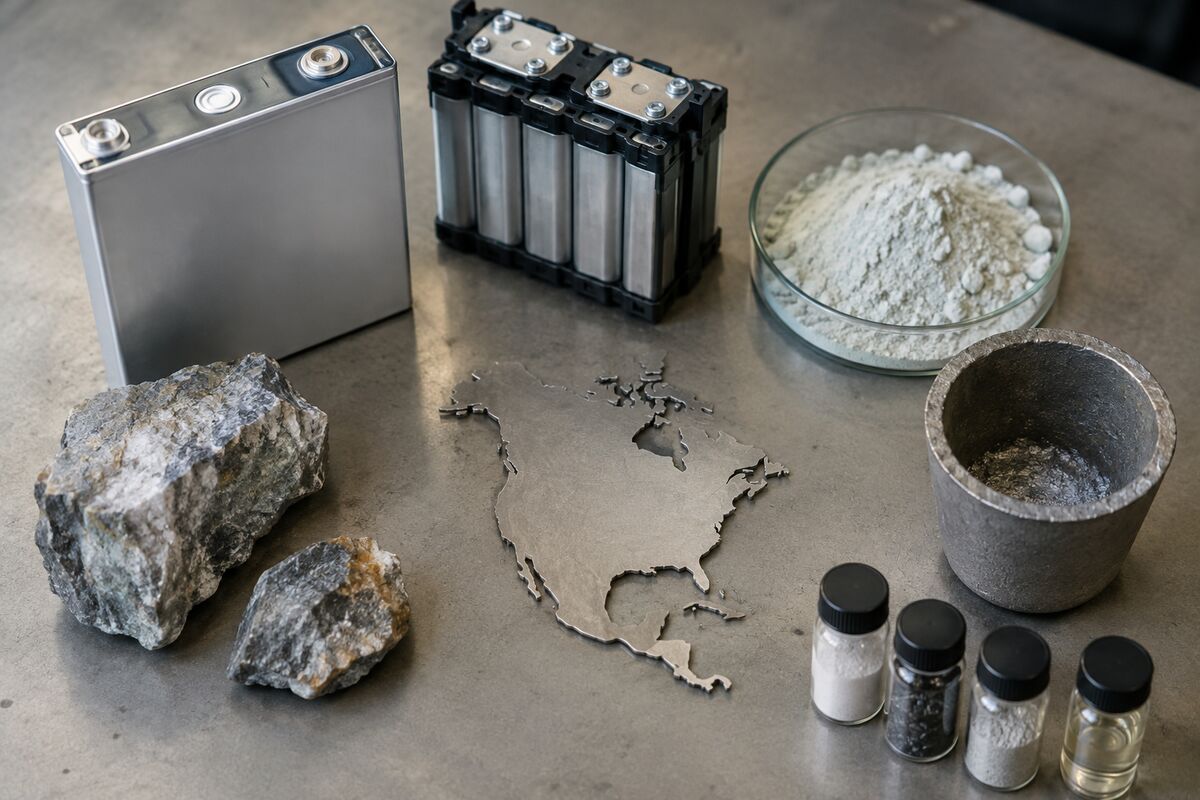
Critical-minerals investing is being pulled in two directions. On one side sits a broad commodity selloff, weighing on lithium and other resource equities. On the other is a strategic push by Western economies to loosen China’s grip on critical-minerals supply chains, with tungsten emerging as an important part of that contest.
That clash is reviving speculative interest in Canadian rare-earth developers such as Ucore Rare Metals. The company’s Bokan Dotson Ridge project, described as a heavy rare-earth project, offers investors a narrow window into a much larger story: supply-chain security may be gaining importance even while the market remains impatient with development-stage miners.
The supply-chain story moves beyond rare earths
Reuters commentary highlighted Western efforts to challenge China’s dominance in critical minerals, paying particular attention to tungsten supply chains. The significance is less about one mineral in isolation than about the architecture of supply: Western buyers and policymakers are looking for alternatives as dependence on a dominant supplier becomes a strategic concern.
That backdrop can cast a different light on Canadian developers. A company does not need to be producing at scale for its project to attract attention when investors are searching for potential sources outside China. But strategic relevance is not the same thing as commercial delivery. The gap between those two ideas is where much of the speculation around small-cap resource stocks lives.
As outlined in the Yahoo Finance roundup of Canadian rare-earth stocks, Ucore is associated with the Bokan Dotson Ridge heavy rare-earth project. The source also references revenue growth of up to 68%. That figure may add to the company’s appeal in a market looking for evidence of business momentum, but it should not be mistaken for a production forecast, project valuation or guarantee of future performance.
Why Ucore is back on the radar
Ucore’s appeal rests partly on the intersection of geography, minerals and timing. Canadian rare-earth developers are attracting fresh investor attention because Western supply-chain initiatives make non-Chinese sources more strategically visible. In that setting, a named heavy rare-earth project can become a focal point for investors trying to identify potential beneficiaries of a long-term reshaping of the minerals market.
Yet the market’s enthusiasm remains conditional. Ucore is tied to a development-stage project, meaning the investment narrative depends on progress that still has to be demonstrated. Development-stage resource companies face the familiar hazards of financing, technical execution, permitting and timing. None of those risks disappears simply because a mineral is strategically important.
Strategic demand meets a sour commodity tape
The timing is especially telling. Lithium and broader critical-minerals equities remain under pressure from a commodity selloff, creating a market that is skeptical of resource stories and sensitive to near-term weakness. Investors may therefore be drawn to the strategic case while remaining unwilling to assign full value to projects whose commercial path is still developing.
That tension can produce sharp changes in sentiment. Supply-chain diversification is a long-duration theme, while commodity markets often judge companies through a much shorter lens. A Western push involving tungsten may strengthen the broader case for mineral security, but it does not remove the volatility associated with early-stage Canadian resource stocks.
For Ucore, the Bokan Dotson Ridge project places the company within that debate. Its heavy-rare-earth profile may give the story strategic resonance, while the reference to revenue growth of up to 68% offers another point of interest. Still, the available information does not establish project economics, production forecasts, share-price performance or government funding. Those omissions matter: the investment case remains a contest between future strategic demand and present development risk.
The result is a stock-market narrative with two clocks running at once. The first tracks Western efforts to build more resilient critical-minerals supply chains. The second tracks commodity prices, investor risk appetite and the difficult work of advancing a resource project. Ucore’s renewed visibility reflects the first clock, but its speculative character is shaped by the second.
Bull/Bear Verdict
Bull Case: Western efforts to challenge China’s critical-minerals dominance, including the focus on tungsten supply chains, may increase attention on Ucore’s Bokan Dotson Ridge heavy rare-earth project; the cited revenue growth of up to 68% could further support the company’s visibility.
Bear Case: The commodity selloff weighing on lithium and critical-minerals equities may continue to pressure sentiment, while Ucore’s development-stage project carries financing, technical execution, permitting and timing risks that strategic demand may not overcome.