
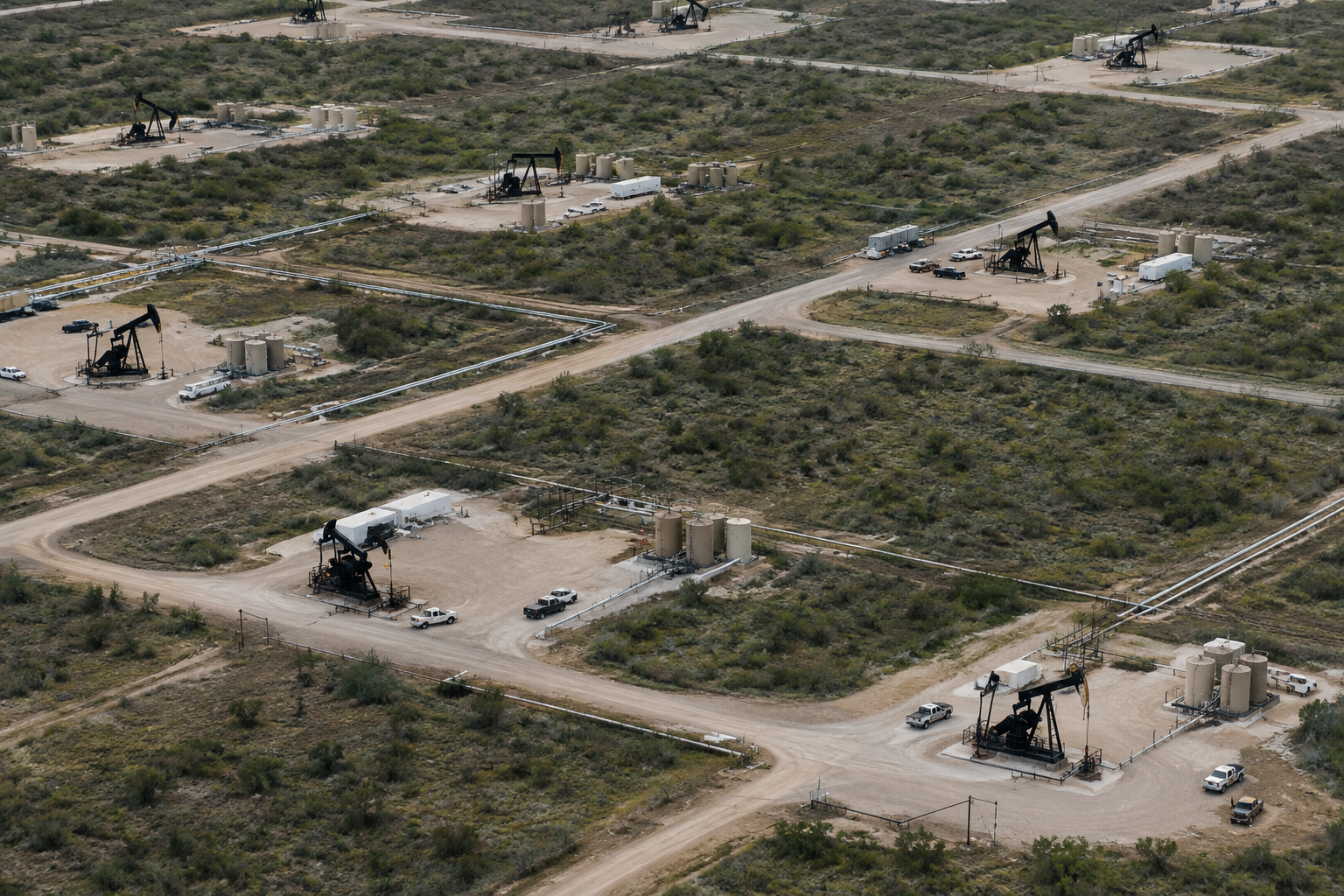
US shale consolidation is moving back into the spotlight, and Crescent Energy’s $4.2 billion agreement to acquire Devon Energy’s Eagle Ford assets is the clearest signal yet. This is not merely an asset transfer between two producers. It is a strategic test of whether scale, basin focus and disciplined capital allocation are becoming more valuable as oil-market volatility returns.
The timing matters. Rising crude prices linked to Middle East supply disruptions may be strengthening the rationale for a large, concentrated acquisition in one of the United States’ established oil basins. Crescent is buying exposure to the Eagle Ford at a moment when commodity sensitivity is once again commanding investor attention, while Devon is positioning its portfolio around a different capital-allocation decision.
According to the reported transaction, Crescent agreed to acquire Devon’s Eagle Ford assets in a deal valued at $4.2 billion. The available information does not include production figures, transaction financing details or other terms. That limitation is important: the strategic implications are visible, but the full financial verdict will depend on details not provided here.
A test of shale consolidation
The Eagle Ford has long been a recognizable US shale basin, and a transaction of this size could reinforce the industry’s broader consolidation narrative. The logic is straightforward. In a mature basin, an acquirer may be able to build a more focused operating position, while the seller can redirect capital toward other priorities.
That does not automatically make every large deal attractive. Scale only creates value when management can allocate capital effectively and operate the combined asset base with discipline. Still, Crescent’s agreement suggests that companies may view established shale acreage as strategically important even after years of investor scrutiny over spending and returns.
The transaction could also influence how investors evaluate future US shale combinations. Rather than treating consolidation as a simple pursuit of volume, the market may focus more closely on basin concentration, commodity exposure and the buyer’s ability to justify a multibillion-dollar commitment. The $4.2 billion valuation gives investors a clear reference point for that debate, even though the supplied information does not disclose the assets’ production profile.
Why the oil-price backdrop matters
Higher crude prices associated with Middle East supply disruptions may be affecting the timing of the agreement. A stronger oil-price environment can make upstream assets appear more strategically valuable, particularly when supply risks are elevating the importance of US production. For Crescent, the deal could increase exposure to that environment through a larger Eagle Ford position.
But commodity strength cuts both ways. If the transaction is being assessed against an unusually supportive oil-market backdrop, investors may ask whether the acquisition remains compelling across a wider range of crude-price conditions. The available facts do not establish Crescent’s assumptions or expected returns, so any conclusion about the deal’s financial outcome would be premature.
Different capital-allocation messages
For Crescent, the acquisition represents a substantial commitment of capital to a defined US shale basin. The strategic message is expansion, concentration and greater exposure to crude prices. Investors tracking the company may therefore focus on how management explains the $4.2 billion valuation and balances acquisition spending with other capital priorities.
For Devon, the sale points to portfolio reshaping. Divesting the Eagle Ford assets could indicate a decision to emphasize other parts of its business or pursue a different allocation of capital. Without additional transaction terms, it is not possible to determine whether Devon’s move reflects valuation, strategic focus or another consideration.
The bigger takeaway is that shale consolidation is no longer just a volume story. It is increasingly a question of who wants more exposure to a particular basin, who is willing to deploy capital at a given point in the oil cycle, and who prefers to simplify or redirect its portfolio. Crescent and Devon are now on opposite sides of that equation.
Bull/Bear Verdict
Bull Case: The $4.2 billion Eagle Ford acquisition could give Crescent greater exposure to higher crude prices and strengthen its position in a renewed US shale consolidation cycle.
Bear Case: The deal could face scrutiny if the $4.2 billion valuation proves difficult to justify across changing oil-price conditions, particularly because the supplied information does not include production figures or transaction terms.