
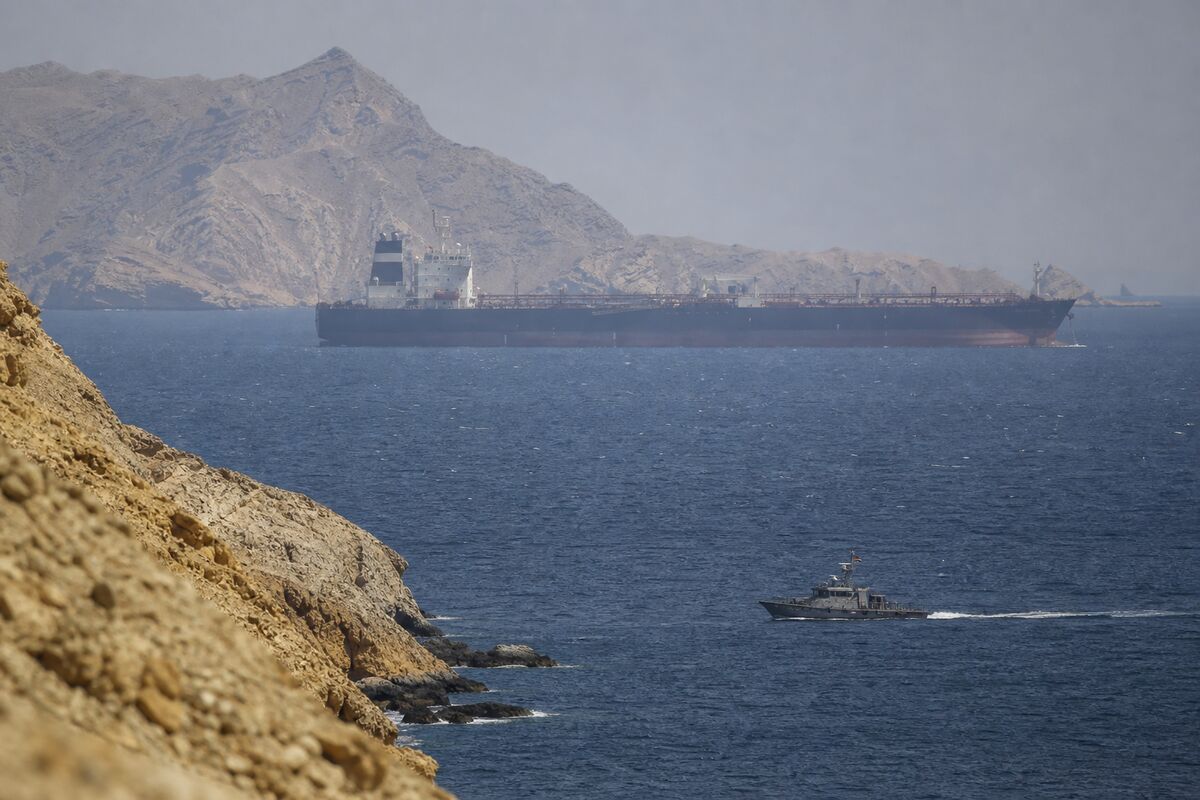
Oil markets were already marching toward a fourth consecutive monthly gain when the Strait of Hormuz delivered a fresh jolt of geopolitical risk. WTI crude futures climbed 2.5% to a session high of $104.98, putting the world’s most closely watched oil benchmark back in the spotlight for traders weighing how quickly a security incident could become a supply problem.
The immediate story is still developing, but the market’s reaction is clear: a narrow maritime passage has once again become a pressure point for crude, US energy equities and inflation-sensitive assets. The reported tanker fires do not by themselves establish a prolonged disruption, yet they add a new layer of uncertainty to an oil rally that was already gathering momentum.
According to the assignment’s reported details, Iran’s IRGC Navy said that three tankers caught fire in the Strait of Hormuz. Separately, security sources reportedly said that a tanker was hit by limpet mines. That second claim remains attributed to security sources; it should not be treated as a confirmed finding. The distinction matters in a market where a confirmed attack, an alleged attack and a broader threat warning can produce very different price responses.
The reported tanker-fire developments have therefore landed at a sensitive moment. WTI’s move to $104.98 and the prospect of a fourth straight monthly gain suggest that traders are assigning more weight to supply risk, even as the precise circumstances around the incident remain subject to confirmation.
Why Hormuz Matters to Oil Traders
The Strait of Hormuz is important because it is a critical channel for global oil supply. Renewed attacks or credible threats against tankers could increase the perceived risk that cargo movements face delays, disruption or higher security costs. Even without an immediate physical loss of supply, that uncertainty can become embedded in crude pricing through a larger geopolitical risk premium.
That is the market’s difficult balancing act: traders must price what has happened while also estimating what might happen next. If the tanker-fire reports remain isolated, the supply-risk premium could prove temporary. If attacks recur or shipping activity is materially affected, the implications for crude could become more durable. The available information does not establish which path will follow.
US Energy Exposure in the Crosscurrents
For US-listed energy exposure, the most direct market reference is WTI crude. The 2.5% move to $104.98 gives traders a clear signal that the incident has mattered to the benchmark, at least during the session. Vehicles such as USO may draw attention because they are closely associated with oil-market exposure, while the energy-sector ETF XLE may become a barometer for how investors are translating higher crude prices into views on US energy equities.
That transmission is not automatic. Crude prices can react immediately to a geopolitical headline, while energy equities may reflect a wider mix of expectations. Traders may weigh whether the oil move persists, whether supply concerns intensify and how the broader market handles the inflation implications. In other words, Hormuz risk may lift the headline price of oil before it produces a uniform response across US-listed energy exposure.
Inflation Moves Back Into the Conversation
Oil at more than $100 a barrel, alongside a 2.5% session gain, can draw renewed attention to inflation expectations. Higher crude prices may raise concerns about energy costs feeding into the broader price picture, particularly if the move develops into a sustained trend rather than a short-lived reaction.
That could complicate the Federal Reserve’s policy backdrop. Persistent energy-price pressure may make the inflation outlook less comfortable, potentially influencing how policymakers assess the path of interest rates. But the incident alone does not determine Federal Reserve policy. The eventual impact would depend on the duration of the oil move, the extent of any supply disruption and how inflation expectations respond.
For now, the market is navigating a familiar but combustible formula: a strategically important oil route, an unconfirmed security claim, and crude already heading toward a fourth consecutive monthly gain. WTI’s climb to $104.98 shows that traders are not ignoring the risk. The next question is whether the headlines fade—or whether the Strait of Hormuz keeps adding heat to an already expensive energy market.
Bull/Bear Verdict
Bull Case: If tanker attacks recur or supply concerns intensify, WTI’s 2.5% climb to a session high of $104.98 could signal room for additional geopolitical risk to support crude and US energy exposure through USO and XLE.
Bear Case: If the reported incident remains isolated and the limpet-mine claim is not confirmed, the supply-risk premium could fade, leaving oil’s fourth monthly gain vulnerable to a reversal and easing pressure on inflation expectations.