
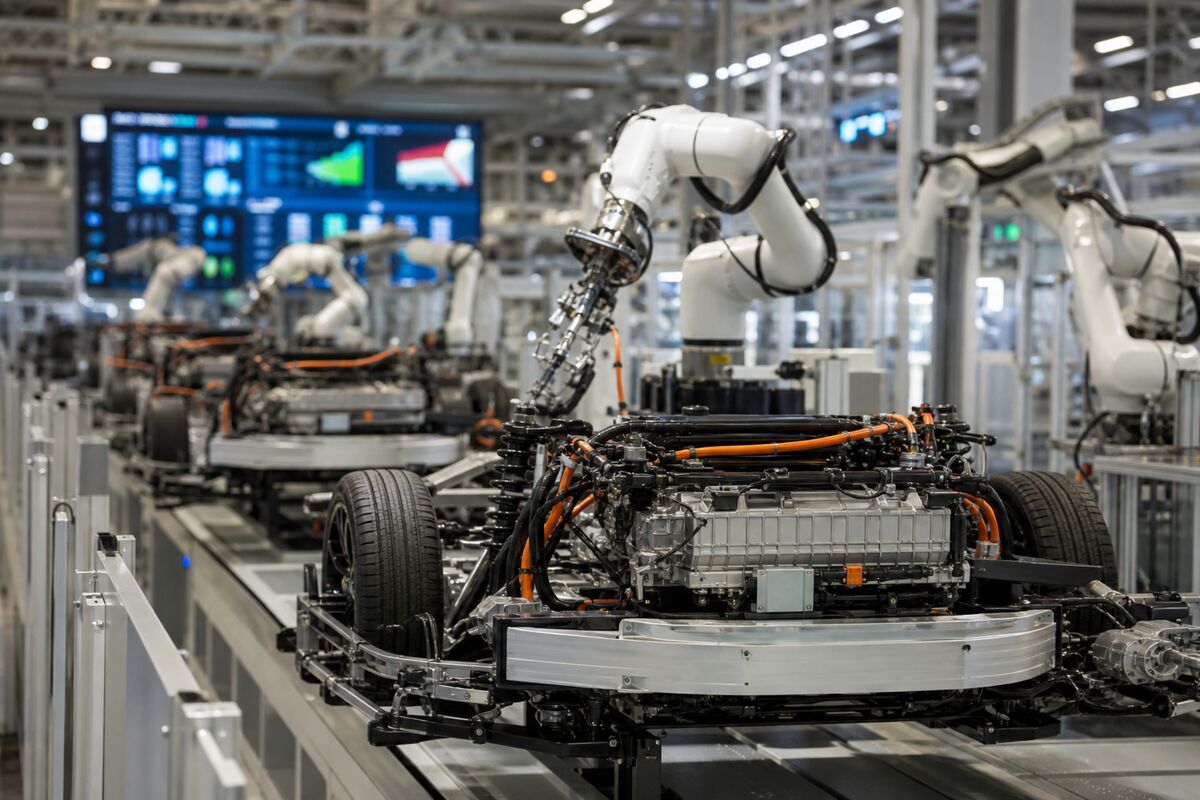
Ford’s launch of US-made battery cells is a meaningful step for domestic electric-vehicle manufacturing—but it is not a clean break from China. The cells are being produced and shipped for Ford’s next-generation EVs, while the underlying technology is licensed from Chinese battery manufacturer CATL.
That combination captures the central strategic tension facing Ford ($F): the company can localize production on US soil, yet still depend on Chinese battery expertise to support its EV ambitions. For investors, the arrangement is less a simple victory for localization than a test of whether domestic manufacturing can reduce supply-chain exposure without sacrificing technical capability.
Ford’s US production and shipments give the company a more direct role in the battery portion of its EV supply chain. That could provide greater visibility over manufacturing execution and help align battery output with the company’s next-generation electric vehicles. The move also places battery-cell production closer to Ford’s US vehicle operations, potentially strengthening the industrial foundation behind its EV strategy.
But the source of the technology matters. CATL’s licensed role means Ford’s domestic manufacturing footprint remains connected to a Chinese technology provider. The arrangement may allow Ford to combine US production with established battery know-how, but it also leaves a layer of strategic dependence in place. Localization, in this case, is about where the cells are made—not necessarily where every critical capability originates.
Localization versus technological independence
That distinction is important as US industrial policy seeks to encourage domestic EV and battery manufacturing. A US factory can support local production objectives while still relying on foreign-developed designs, processes, or expertise. Ford’s approach therefore illustrates how difficult it may be to build a fully self-sufficient battery ecosystem quickly.
The practical trade-off is clear:
- Domestic manufacturing: Ford has begun producing and shipping battery cells in the US for its next-generation EVs.
- Licensed technology: The cells use technology from CATL, linking the US operation to a Chinese battery company.
- Strategic exposure: Ford’s battery plans remain connected to broader US-China technology and supply-chain tensions.
For Ford, licensed technology may support the execution of its EV manufacturing plans. It may also help the company avoid treating domestic production and technical capability as mutually exclusive. However, the relationship could become more complicated if geopolitical tensions intensify or if policymakers place greater emphasis on reducing Chinese technology dependencies across the battery supply chain.
What it means for Ford’s EV ambitions
The launch suggests Ford is pursuing a pragmatic path: build battery cells in the US while using technology that is already available through a licensing arrangement. That approach could help advance the company’s next-generation EV program, but it also creates questions about how much control Ford ultimately has over its battery roadmap.
Future manufacturing decisions may therefore extend beyond factory location. Ford may need to weigh technology licensing, supply continuity, policy requirements, and the resilience of its broader battery ecosystem. The more important Chinese technology becomes to the process, the more significant geopolitical developments could become for Ford’s EV execution.
Investors should read the announcement as evidence of progress and constraint at the same time. US production and shipments indicate movement from strategy toward operations. The CATL license indicates that the transition still depends on cross-border expertise. Neither point cancels the other.
That is the broader lesson for the US battery-localization effort. Domestic capacity can expand even when the industry remains technologically interconnected with China. Ford’s arrangement may demonstrate how localization proceeds in practice: not through an immediate severing of international links, but through an attempt to place more manufacturing activity inside the United States while managing the dependencies that remain.
For additional reporting on Ford’s US battery-cell launch and its CATL technology agreement, see the source report from CNBC.
Bull/Bear Verdict
Bull Case: Ford’s US production and shipments of cells for next-generation EVs may strengthen domestic manufacturing execution while the CATL license provides access to established battery technology.
Bear Case: Ford’s reliance on CATL technology could leave its EV supply chain exposed to US-China geopolitical tensions, limiting how fully the launch reduces strategic dependence.