
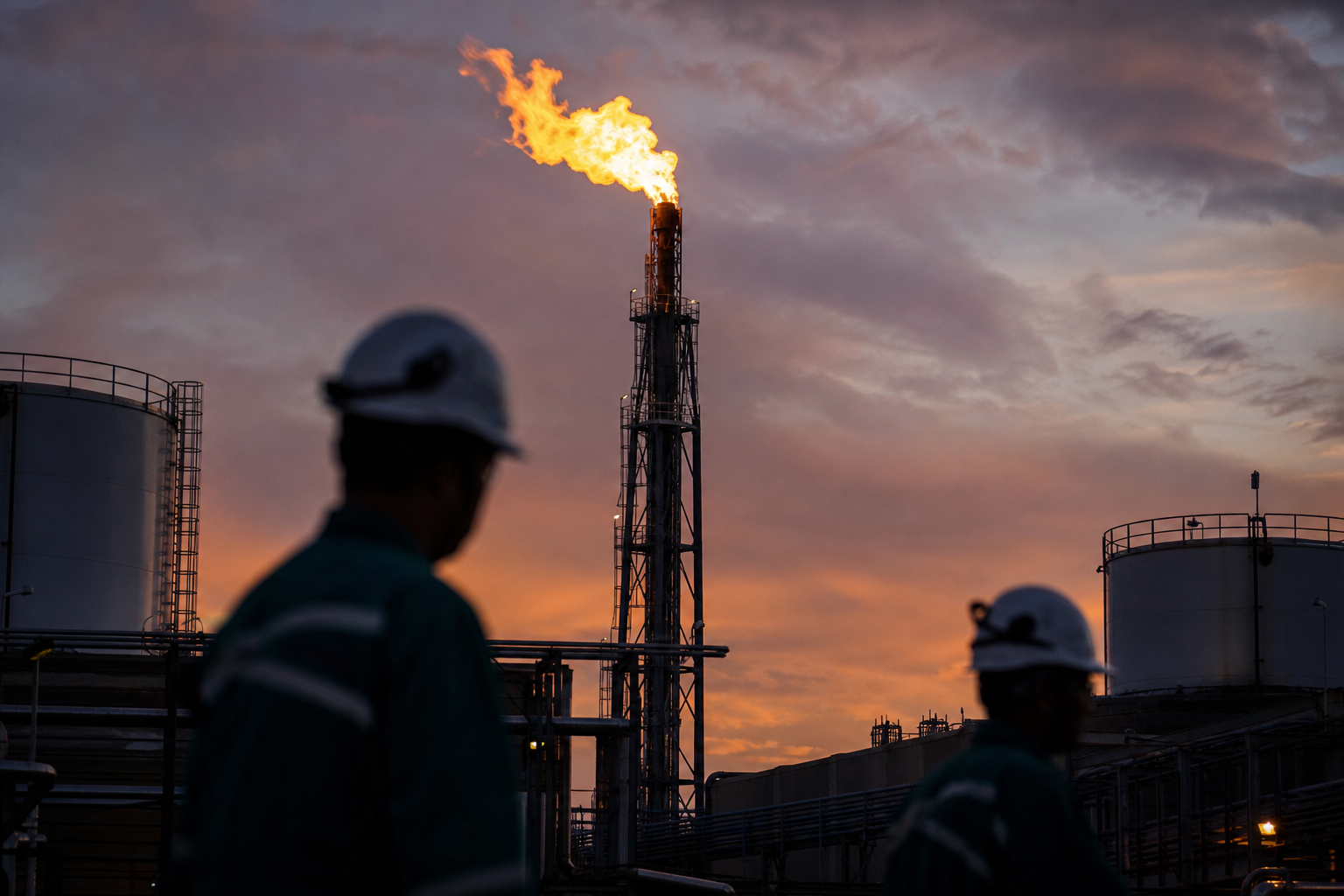
In a world where geopolitical tensions can shift market dynamics overnight, the recent military exchanges between the U.S. and Iran serve as a stark reminder of the fragility of energy markets. Oil prices surged nearly 4% as West Texas Intermediate (WTI) Crude reached $85.07 per barrel and Brent Crude climbed to $90.28 per barrel. This spike is not merely a reaction to immediate events; it reflects the underlying vulnerabilities inherent in global oil supply chains.
The ramifications of these developments stretch far beyond the headlines. The geopolitical tensions from U.S.-Iran military exchanges are not just a temporary blip; they could sustain elevated prices for the foreseeable future. Investors must brace themselves for a market landscape where oil prices are driven not only by supply and demand fundamentals but also by the specter of military conflict.
Understanding the Current Landscape
The recent military exchange on Larak Island and the Iranian Revolutionary Guard Corps (IRGC) attacks on Jordanian bases have sparked fears of a broader conflict. These developments have heightened concerns over oil supply disruptions, a scenario that could keep prices elevated. Moreover, the potential for new U.S. sanctions against Iran adds another layer of uncertainty. Investors should closely monitor these geopolitical developments, as they will undoubtedly affect market sentiment.
In response to these tensions, the market is also anticipating upcoming data from the Energy Information Administration (EIA) on crude oil inventories. This data could offer critical insights into supply levels and further influence price movements. A tightening of inventories could exacerbate the current price surge, while any signs of easing may provide temporary relief.
Implications for Canadian Oil Producers
The implications of rising oil prices are particularly significant for Canadian oil sands producers such as $CNQ, $SU, and $CVE. As crude prices climb, these companies may find themselves in a favorable position to capitalize on higher margins. The Canadian energy sector has long been sensitive to fluctuations in crude prices, and this latest surge could bolster their financial outlook.
With WTI and Brent both hovering at substantial levels, Canadian producers could see renewed interest from investors looking for exposure to the energy sector. Higher crude prices typically translate into increased revenues, which could enhance the profitability of these companies. However, investors must remain cautious, as prolonged geopolitical instability could introduce volatility that complicates the investment landscape.
Conclusion
As the situation evolves, investors must stay informed and agile. The current spike in oil prices amid U.S.-Iran military tensions underscores the need for vigilance in energy markets. The potential for new sanctions and the impact of forthcoming inventory data will be crucial factors to watch. For Canadian oil sands producers, this may represent a golden opportunity, but it is one fraught with risk.
Source