
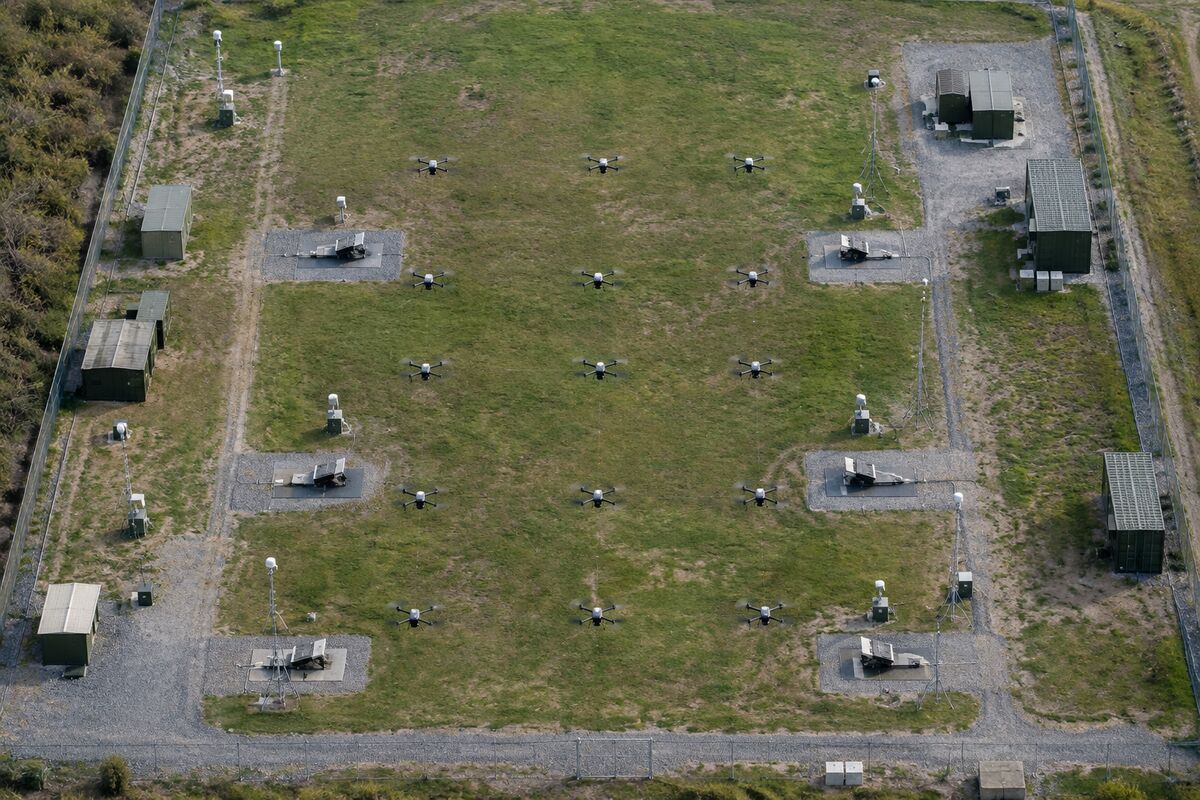
Powerus Corporation has entered the Nasdaq market as a newly listed U.S. defense-technology company focused on autonomous drones and other unmanned systems. Following its completed merger with Aureus Greenway Holdings, the combined company now trades under the ticker $PUSA.
The listing gives public-market investors a new company to track within the autonomous-drone, counter-UAS and unmanned-defense themes. But the market-entry story is about access and positioning—not a reported valuation, revenue profile, profitability record or share-price performance, none of which were provided in the announcement.
Powerus marked the transition with a high-visibility Nasdaq opening-bell ceremony. The company’s announcement confirms the merger’s completion and the company’s Nasdaq trading identity as PUSA.
What the merger and listing establish
At the corporate level, the key event is straightforward: Powerus completed its merger with Aureus Greenway Holdings, and the combined company began trading on Nasdaq. That creates a public-market vehicle tied to Powerus’s stated focus on autonomous drones and other unmanned systems.
- Corporate milestone: Powerus completed its merger with Aureus Greenway Holdings.
- Trading venue: The combined company trades on Nasdaq.
- Ticker: The company trades under $PUSA.
- Operating focus: Powerus identifies as a U.S. defense-technology company focused on autonomous drones and other unmanned systems.
- Listing ceremony: Powerus rang the Nasdaq opening bell to mark the debut.
Those facts matter because a listing changes how investors can monitor the company. Instead of following the autonomous-drone theme only through established defense businesses or private-market companies, market participants can now track a Nasdaq-listed issuer whose stated focus is centered on unmanned defense technology.
Why the autonomous-drone theme draws attention
Autonomous drones sit at the intersection of several closely watched defense-technology categories. The first is unmanned systems: platforms designed to perform missions without a conventional onboard pilot. The second is counter-UAS, the broader technology area focused on detecting, tracking or addressing unmanned aerial systems. The third is defense-technology spending, which has helped keep unmanned capabilities on the radar of investors and industry observers.
That thematic overlap may attract attention to $PUSA. A publicly traded company focused on autonomous drones and unmanned systems can become a reference point for investors evaluating how specialized businesses fit into the broader defense-technology landscape. The listing may also make Powerus easier to follow through public disclosures and market activity than it was before the merger and Nasdaq debut.
Still, the announcement supports a narrower conclusion than broad sector enthusiasm might suggest. Powerus’s stated focus identifies its intended technology area; it does not, by itself, establish customer contracts, production scale, financial results, valuation, profitability or competitive position. Those metrics were not included in the supplied information and should not be inferred from the listing ceremony.
Reading the PUSA market entry
For the market, the immediate development is the creation of a new Nasdaq-listed exposure to the autonomous-drone and unmanned-defense theme. For Powerus, the merger with Aureus Greenway Holdings and the opening-bell event provide the formal public-market launch.
The next analytical question is not whether the theme is prominent—it is whether future company disclosures provide measurable detail about Powerus’s technology, business activity and financial performance. Until that information is available, $PUSA is best understood as a newly listed defense-technology company with a stated focus on autonomous drones and unmanned systems, rather than as proof of commercial or financial outcomes.
Bull/Bear Verdict
Bull Case: The completed merger, Nasdaq listing under $PUSA and stated focus on autonomous drones and unmanned systems could give investors a new public-market vehicle for tracking the autonomous-drone, counter-UAS and defense-technology themes.
Bear Case: The available announcement provides no valuation, revenue, profitability or share-price data, so the listing alone may not establish commercial traction or financial performance for $PUSA.