
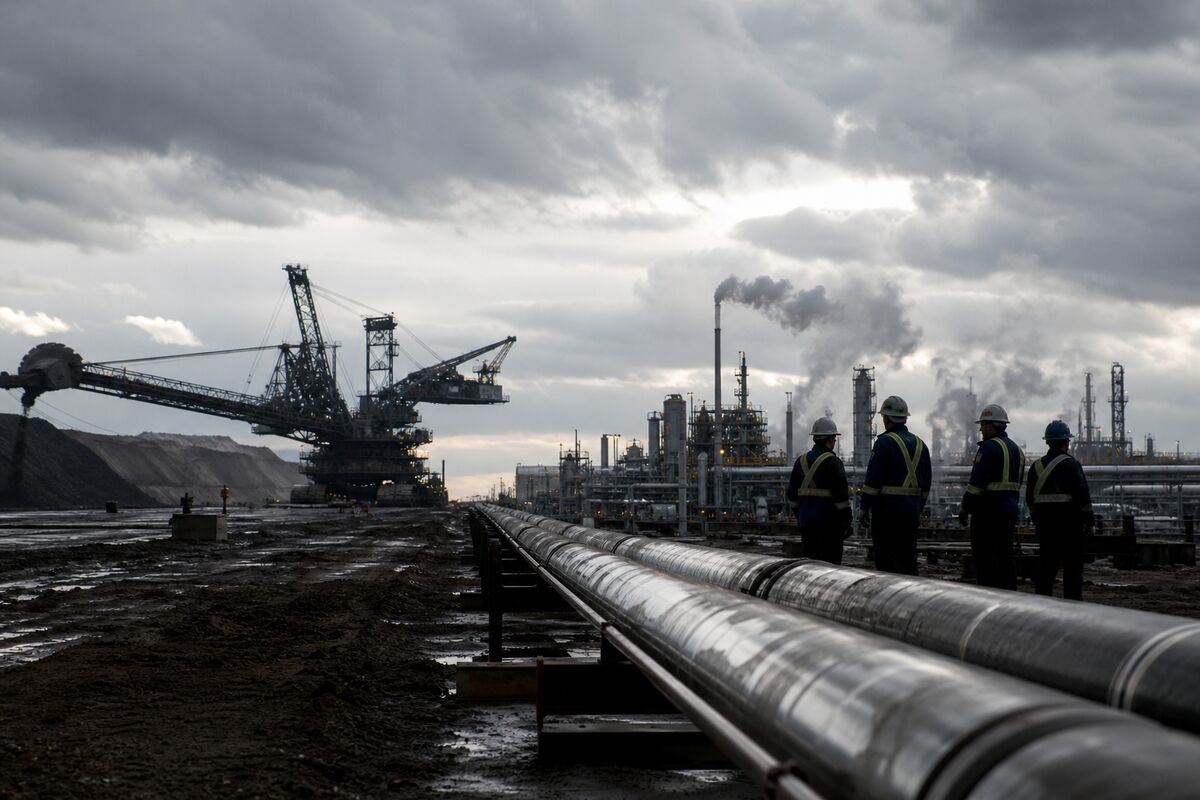
As the winds of trade tensions whip through the North American energy sector, companies like Suncor Energy ($SU.TO) and Canadian Natural Resources ($CNQ.TO) find themselves navigating a storm of geopolitical complexities. With the USDCAD currency pair showing signs of volatility—having recently bottomed at 1.37315 before making a notable gap higher—investors are left pondering the implications for the future of energy investments.
The latest twist in this saga comes from Canada’s decision to exclude US seafood from its retaliatory tariffs, a gesture that hints at a selective de-escalation amidst ongoing disputes. This nuanced approach could have broader implications, particularly for the energy sector where pricing is already sensitive to shifts in currency valuation and geopolitical tensions.
The Currency Effects
The USDCAD currency pair’s fluctuations can have a significant impact on the revenue streams of Canadian energy firms. A stronger US dollar typically translates to lower revenues for these companies when earnings are converted back to Canadian dollars. As the pair gapped higher, it raised eyebrows among investors who keep a close watch on how such shifts can affect profitability. With oil prices currently sitting at $81.83 for WTI and $86.45 for Brent, the economic backdrop becomes even more intricate for firms like $SU.TO and $CNQ.TO.
Geopolitical Tensions
Geopolitical factors continue to add layers of complexity to the investment landscape. The interplay of trade negotiations, tariffs, and energy prices creates a volatile environment for investors. The selective nature of Canada’s tariff exclusions could indicate a strategy to protect its vital energy sector while easing tensions in other areas. However, this balancing act leaves investors on edge, uncertain of how these decisions will ultimately play out.
Looking Ahead
For investors eyeing the Canadian energy sector, understanding the implications of these trade dynamics is crucial. Both $SU.TO and $CNQ.TO must navigate not only the direct effects of currency fluctuations but also the broader geopolitical landscape. The current oil prices, bolstered by global demand and intricate supply chains, suggest potential resilience, but the ever-changing nature of trade relations could introduce unforeseen challenges.
As we watch the unfolding story of US-Canada trade relations, one thing remains clear: the energy sector stands at a crossroads. The decisions made in the coming days could shape the trajectories of these key players in profound ways.
For more insights into the market shifts, you can follow the detailed analysis on Investing Live.