
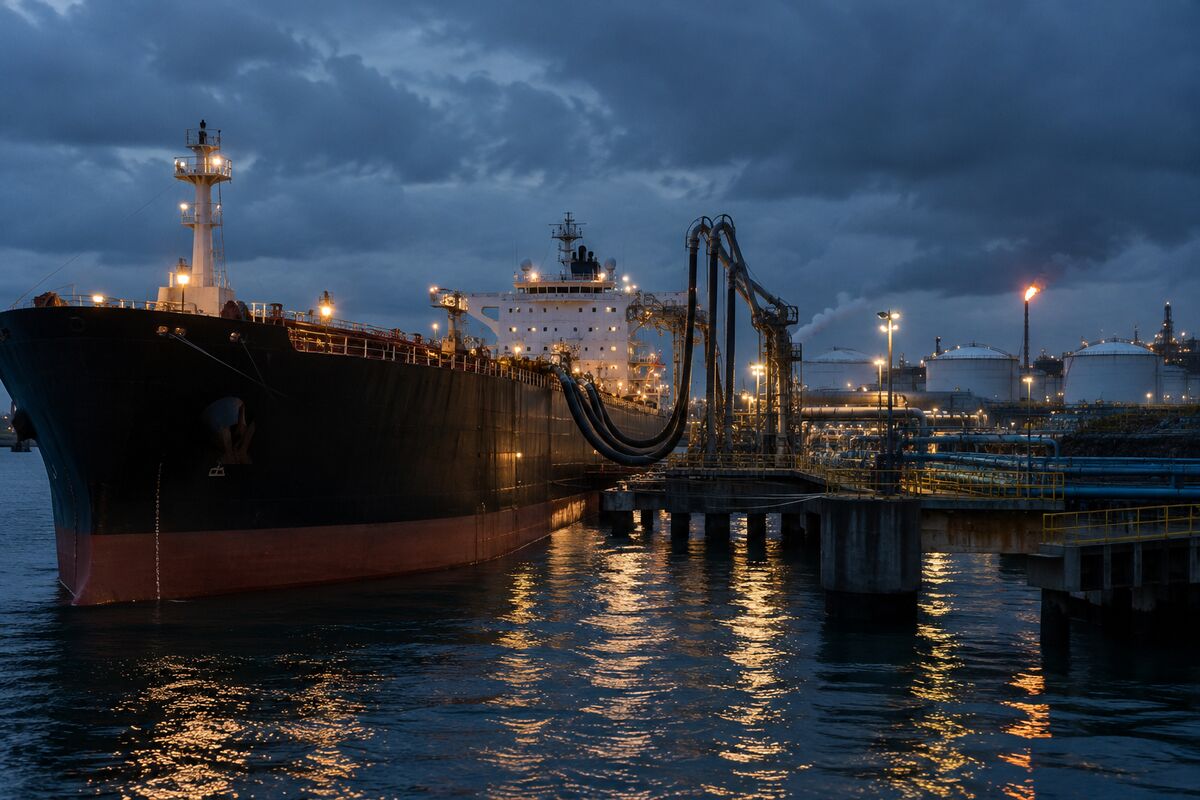
Oil’s latest paradox is arriving by tanker: geopolitical tension is supporting global benchmark prices while the same crisis is leaving Canadian heavy crude stranded at a discount. The result is a market where oil can look expensive at the pump and painfully cheap at the wellhead, depending on which barrel is being discussed.
For Canadian Natural Resources Limited, or $CNQ, that split matters. Record shipping rates and disruptions around the Strait of Hormuz are creating a heavy crude glut in the Americas, pushing Canadian, Colombian and Ecuadorian crude prices down by roughly $10 per barrel, according to OilPrice.com. The pressure could weigh on realized pricing and producer margins even as geopolitical risk keeps global oil markets on edge.
When global risk becomes a local discount
The central tension is transportation. Middle East tensions and disruptions around the Strait of Hormuz have driven oil shipping costs sharply higher. Tanker capacity is becoming more expensive precisely when producers and refiners need reliable movement of heavy crude, turning logistics into a market force of its own.
That has fractured the usual relationship between headline oil prices and North American crude grades. Geopolitical risk may lift global benchmarks by raising fears about supply security. But for heavy crude produced in Canada and elsewhere in the Americas, higher freight costs can make each barrel harder to move economically. If the shipping bill rises faster than the value of the crude, the discount widens.
It is a familiar commodity-market lesson in an unusually dramatic costume: location matters. A barrel that is valuable in one market can become less attractive when the route to the buyer is suddenly expensive, uncertain or congested.
A glut with a maritime bottleneck
Record tanker rates are creating a heavy crude glut across the Americas. Canadian, Colombian and Ecuadorian crude prices have fallen roughly $10 per barrel, according to OilPrice.com, even as the broader geopolitical backdrop supports elevated global oil prices. That divergence suggests the problem is not simply weak demand. It is also a transportation bottleneck that is trapping supply in the wrong place.
For North American producers, the consequences could spread through the margin structure. Lower realized pricing would reduce the revenue captured for each barrel, while elevated transportation costs could further compress the economics of moving heavy crude to market. The assignment provides no company-specific financial figures for $CNQ, so its exact exposure cannot be quantified here. Still, the market mechanics are clear: a wider crude discount and costlier shipping may create a less favorable pricing environment for producers dependent on moving heavy barrels.
That does not necessarily mean every effect lands immediately or evenly. Producer exposure can vary with transportation arrangements, destination markets and the mix of crude produced. But the current setup makes freight a variable investors cannot treat as background noise.
From the pump to the pantry
The shipping shock may also reach beyond oil producers. Higher freight costs can feed into gasoline prices as the energy system pays more to move crude and refined products. From there, the impact can spread into trucking, agriculture and food distribution.
A UN agency has warned that disruptions to shipping through Hormuz are beginning to affect global harvests. That warning gives the crisis a wider footprint: the issue is no longer only how much crude is available, but how reliably fuel and other essential inputs can reach the industries that depend on them. Shipping inflation can move from the pump to grocery prices through a chain of transportation and production costs.
Policy relief, but no easy reset
The United States is weighing an easing of sanctions on “shadow fleet” vessels to help reduce freight rates. If that policy were implemented and expanded shipping capacity returned to the market, it could relieve some of the pressure on tanker costs and narrow transportation-driven crude discounts.
But a policy discussion is not the same as a market solution. The longer the Iran conflict persists, the darker the longer-term outlook for oil becomes, according to Reuters commentary. Sustained geopolitical risk could keep freight markets unsettled, while the resulting costs weaken the economics of heavy crude in the Americas. That is an uncomfortable combination: higher global anxiety, but poorer market access for some producers.
For $CNQ and its North American peers, the story is therefore less about a single oil-price signal and more about the spread between benchmark prices, realized crude values and transportation costs. Until tanker rates ease or shipping routes normalize, the market may continue to reward barrels that can move easily and penalize those caught behind the bottleneck.
Bull/Bear Verdict
Bull Case: If US action involving “shadow fleet” vessels helps reduce record tanker rates, transportation pressure could ease, potentially supporting Canadian heavy crude realizations and North American producer margins.
Bear Case: If Hormuz disruptions and the Iran conflict persist, the roughly $10-per-barrel decline in Canadian, Colombian and Ecuadorian crude prices could deepen the pressure on realized pricing and margins for producers such as $CNQ.